Indonesia and Viet Nam Highlight Digital Transformation of Legal Services in Bilateral Meeting

2025 11 27 CC Ind Viet 2

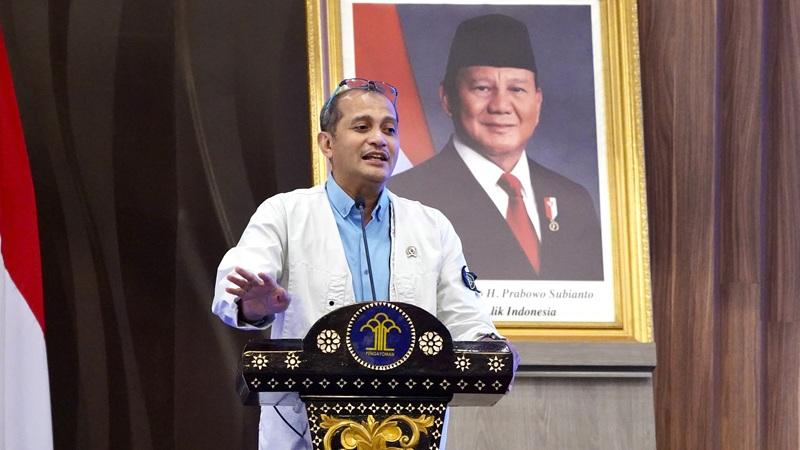
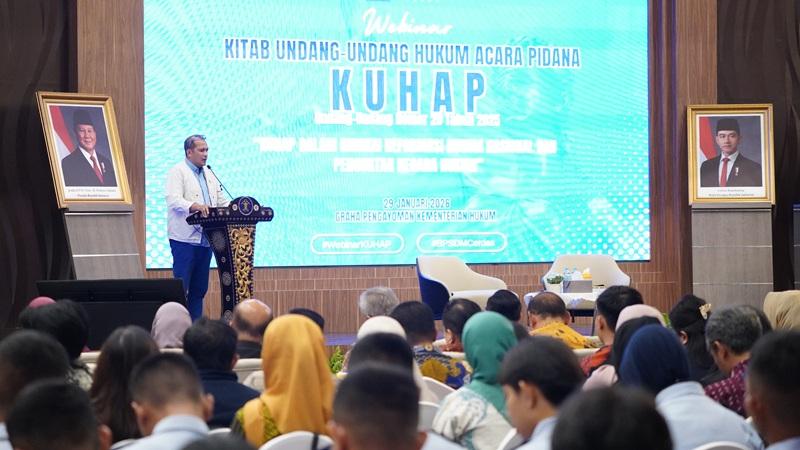
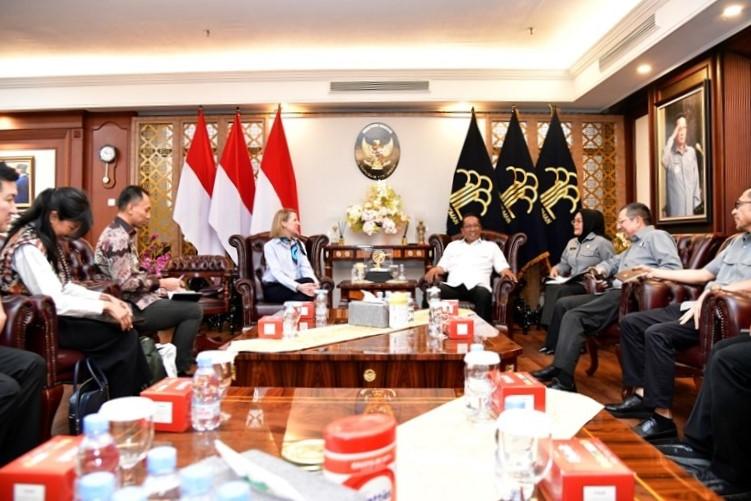
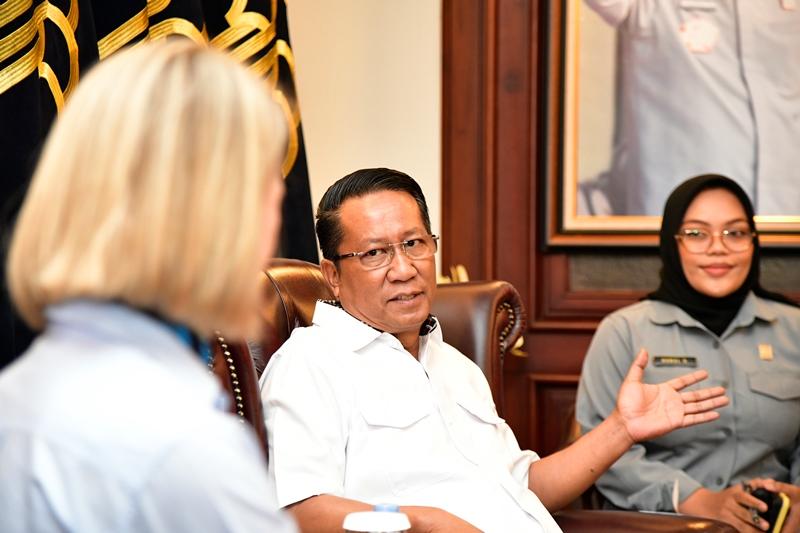
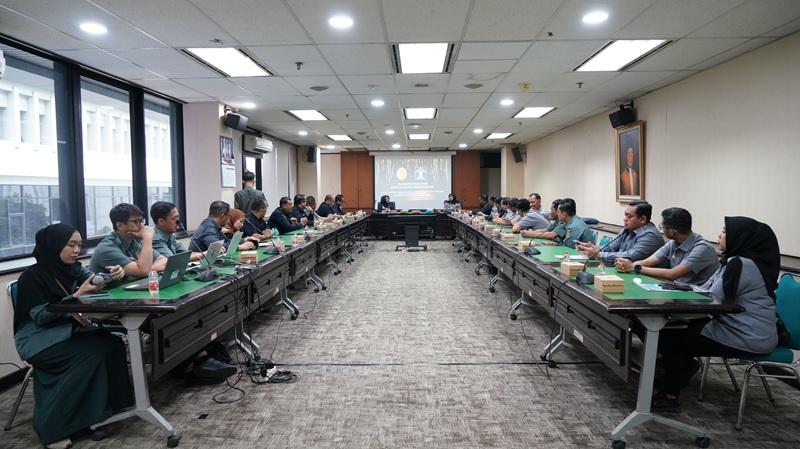
Jakarta — The digital transformation of legal services was the key topic discussed in the bilateral meeting between Indonesia’s Ministry of Law and the delegation from Viet Nam’s Ministry of Justice. Vice Minister of Law, Edward Omar Sharif Hiariej, who welcomed the Vietnamese delegation, emphasized that digitalization is a crucial foundation for the modernization of Indonesia’s legal services.

“Digital transformation is the key to modernizing our legal system and reflects our commitment to building adaptive and accountable legal services,” Eddy said during the meeting in his office in Jakarta on Thursday (November 27, 2025).

He further noted that Indonesia’s commitment to modernizing its legal system is also reflected in the enactment of the new Criminal Code (KUHP).

“The new Indonesian Criminal Code strengthens the foundations of our legal modernization, including the use of technology and the digitalization of law enforcement processes,” he added.

Eddy also highlighted Indonesia’s strategic steps in reforming its legal system through digital initiatives, including in the judicial sector.

“Since 2023, the Supreme Court has implemented a digital civil court system. The public can now access civil case proceedings—from filing to verdict—electronically, making the process faster and more transparent,” he explained.

During the same meeting, the Vietnamese delegation, led by Deputy Director General of the Department of Civil Judgment Enforcement, Tran Thi Phuong Hoa, expressed strong interest in Indonesia’s progress in digitalizing legal administration.

“We would like to learn more about Indonesia’s use of data-based systems, electronic court integration, digitalization of civil judgment enforcement, and the use of technology to improve efficiency and transparency,” Tran said.

Tran also highlighted the importance of strengthening digital skills among law enforcement officials and enhancing intra-ASEAN cooperation to address cross-border legal challenges.

In the discussion session, Head of the Policy Strategy Agency (BSK) of the Ministry, Andry Indrady, explained Indonesia’s plan to apply for membership in the Hague Conference on Private International Law (HCCH).

“Indonesia will soon apply for HCCH membership. We ask for Viet Nam’s support, as Viet Nam has been a member since 2023,” he said.

He added that Indonesia is particularly interested in learning from Viet Nam’s experience in implementing two key HCCH conventions, the Service Convention, which regulates the cross-border delivery of legal documents, and the Evidence Convention, which governs the collection of evidence across jurisdictions.

“Our expectation is that Indonesia’s accession to the HCCH will further strengthen cooperation on civil judgment enforcement between Indonesia and Viet Nam and facilitate smoother cross-border legal coordination,” Andry stated.

The visit also reinforced long-standing cooperation between the two ministries since 2013, including continued collaboration following the Vietnamese Minister of Justice’s visit in 2017. During the meeting, the Vietnamese delegation shared that they had recently signed an MoU with the West Jakarta District Court and the Central Jakarta District Court on civil judgment enforcement and modern judicial services.

The delegation included several senior officials, such as Ms. Tran Thi Phuong Hoa (Head of Delegation), Ms. Doan Thi Ha (Director of Civil Judgment Enforcement Department of Cao Bang Province), Ms. Vo Thi Thu Ba (Deputy Head of Administrative Judgment Enforcement and Bailiffs), Mr. Nguyen Van Tuan (Director of the Civil Judgment Enforcement Department of Quang Tri Province), Mr. Trinh Ngoc Quynh (Director of the Civil Judgment Enforcement Department of Đồng Nai Province), and Mr. Do Ngoc Vinh (Head of the Digital Transformation and Enforcement Data Statistics Division).

The meeting concluded with a joint commitment to strengthen technical dialogue and advance concrete cooperation in legal digitalization, civil judgment enforcement, and the development of a modern legal system that is responsive to global dynamics.

2025 11 27 CC Ind Viet 1

Airspace Management Bill Passed, Regulates Air Vehicles and Aircraft

2025 11 25 Ruang Udara 1

Jakarta – The Bill on Airspace Management has been officially passed during a plenary session between the Government and the House of Representatives (DPR RI). This new law will serve as the legal framework for managing Indonesia’s airspace, including the regulation of air vehicles and aircraft.

Minister of Law, Supratman Andi Agtas, stated that the bill addresses several urgent issues, such as violations of Indonesia’s airspace by foreign aircraft or air vehicles, including breaches of restricted or prohibited air zones.

“Currently, Indonesia does not have clear regulations on airspace violations in its positive law. This bill introduces criminal sanctions for airspace violations, which until now have only been subject to administrative penalties,” Supratman explained as he delivered the President’s final remarks on the bill.

The bill also fulfills the mandate of Law No. 6 of 2023, which ratified the Government Regulation in Lieu of Law (Perppu) No. 2 of 2022 on Job Creation. That law requires the establishment of a law governing airspace management as part of the national spatial planning system.

“Another urgent need is the absence of rules governing the use of unmanned air vehicles and aircraft—such as drones—whether operated by the public or government agencies for various purposes,” Supratman added during the plenary session on Tuesday (25/11/2025).

Endipat Wijaya, Chair of the Special Committee for the Airspace Management Bill, noted that discussions on the bill had taken place since the 2019–2024 DPR term. The bill was designated as a carry-over item in the 2025 Priority National Legislation Program (Prolegnas) and the 2025–2029 Prolegnas.

The Airspace Management Bill consists of 8 chapters and 63 articles, covering areas such as airspace management operations; funding; investigation, prosecution, and court proceedings; as well as criminal provisions.

“The bill contains 581 problem inventory items (DIM), including 353 items on the main articles, 205 explanatory items, and 23 new proposals submitted by DPR factions and the government,” Endipat explained.

2025 11 25 Ruang Udara 2

2025 11 25 Ruang Udara 3

The Bill on Criminal Adjustment Becomes Top Priority Before National Criminal Code Takes Effect

2025 11 24 DPR 1

Jakarta – The Bill on Criminal Adjustment has become priority and must be passed before the National Criminal Code (KUHP) takes effect on 2 January 2026. The law is needed to prevent legal uncertainty, overlapping regulations, and sentencing disparities across different sectors.

The Vice Minister of Law, Edward Omar Sharif Hiariej, conveyed this during a meeting between the Government and the House of Representatives (DPR RI) on the discussion of the Criminal Adjustment Bill.

According to the Vice Minister, the bill is necessary to respond to rapid social changes and the need to harmonize Indonesia’s sentencing framework.

The Vice Minister of Law stated that the formation of the Bill on Criminal Adjustment is also based on the consideration of the rapid social changes, as well as the need for harmonization of the criminal sentencing system.

“These developments require the government to reorganize criminal provisions in sectoral laws and regional regulations so they align with the principles, structure, and philosophy of sentencing under the new Criminal Code,” said Eddy during the meeting at Commission III of the DPR RI on Monday (November 24, 2025).

He underlined that the new KUHP abolishes short-term imprisonment as a principal punishment, meaning that all short-term imprisonment must be converted and adjusted accordingly.

Eddy further explained that the development of the Bill on Criminal Adjustment is a strategic step to strengthen Indonesia’s criminal justice system as a whole. The aim is to ensure that the national sentencing system is implemented effectively, proportionally, and in line with societal developments.

“This bill is designed to harmonize criminal provisions in laws outside the KUHP, in regional regulations, and within the KUHP itself, so that they are aligned with the new sentencing system,” Eddy added.

“These adjustments reflect the state’s commitment to ensuring that all criminal provisions operate within a unified, consistent, and modern legal framework.”

The bill consists of three main chapters, Chapter I covers adjustments to criminal provisions in laws outside the KUHP, Chapter II regulates adjustments to criminal provisions in regional regulations, and Chapter III outlines adjustments and refinements to the new National Criminal Code.

2025 11 24 DPR 2

2025 11 24 DPR 3

2025 11 24 DPR 4

Peacemaker Justice Award 2025 Opens, 802 Village and Urban Village Heads Officially Earn NLP Title

2025 11 24 PJA 1

Depok – The government has announced the opening of the 2025 Peacemaker Justice Award (PJA), an annual recognition program for village and urban village heads who have shown extraordinary dedication in resolving legal issues through non-litigation methods. Serving as protectors, listeners, and mediators, these local leaders are recognized for maintaining social harmony and earning the trust of their communities.

The program follows a nationwide paralegal and peacemaker training attended by 1,023 village and urban village heads. Of these, 802 participants from 35 provinces, 255 districts/cities, and 586 subdistricts successfully completed the training and practical assignments, earning the title of Non-Litigation Peacemaker (NLP). A total of 130 of them have been invited to Jakarta for the final selection round, where they will compete to become the Top 10 Peacemakers in the 2025 PJA.

The Vice Minister of Law, Eddy Hiariej, congratulated the 130 selected participants who will undergo further assessment before the Top 10 are chosen. He emphasized that the ultimate purpose of law is to achieve peace, order, justice, and welfare.

“Peacemakers are the front line in resolving community disputes,” Eddy said during the event at the Ministry’s Human Resources Development Agency (BPSDM) on Monday (November 24, 2025).

The Vice Minister highlighted the importance of local culture and community values in guiding decision-making. This approach aligns with Law No. 1 of 2023, which will take effect on January 2, 2026, and gives greater recognition to living law while remaining consistent with the principles of the Law on Judicial Power.

He explained that restorative justice can take several forms, one of which is Victim–Offender Mediation, where mediators play a key role in helping parties reach a peaceful settlement.

“I want to emphasize that under Supreme Court regulations, a peace agreement holds the same legal force as a court judgment. This means that if a case is resolved peacefully at the village or urban village level, it is considered final and does not need to go to court,” he stated.

At the same event, Head of the Administrative Affairs Agency of the Supreme Court, Dr. Sobandi, praised the Ministry of Law’s consistency in organizing the PJA. He noted that the presence of the 130 participants demonstrates that the spirit of deliberation and sincerity continues to guide dispute resolution at the grassroots level.

“The court is the last resort. Peace must always be the first choice,” Sobandi emphasized.

He added that many peacemaker alumni have successfully mediated disputes within their communities.

“They work quietly, bringing people back together when relationships are on the brink of breaking, and preventing small conflicts from escalating. May this program inspire you to continue serving as guardians of your communities,” he said.

The opening ceremony of PJA 2025 included the presentation of the Anubawa Sasana Jagadhita (ASJ) Certificate, the Peacemaker Justice Award, ASJ medals, and PJA trophies to selected representatives. With a strong spirit of collaboration and peaceful resolution, peacemakers are expected to remain at the forefront of maintaining harmony within their communities.

2025 11 24 PJA 2

Kemenkum Launches First Offline Podcast, Equips Students with Knowledge on Safe and Legal Business Practices

 2025 11 19 Podcast 1

Semarang – Minister of Law, Supratman Andi Agtas, emphasized the importance of having a solid understanding of legal requirements before starting a business. A strong legal foundation helps prevent future risks, disputes, or potential legal liabilities.

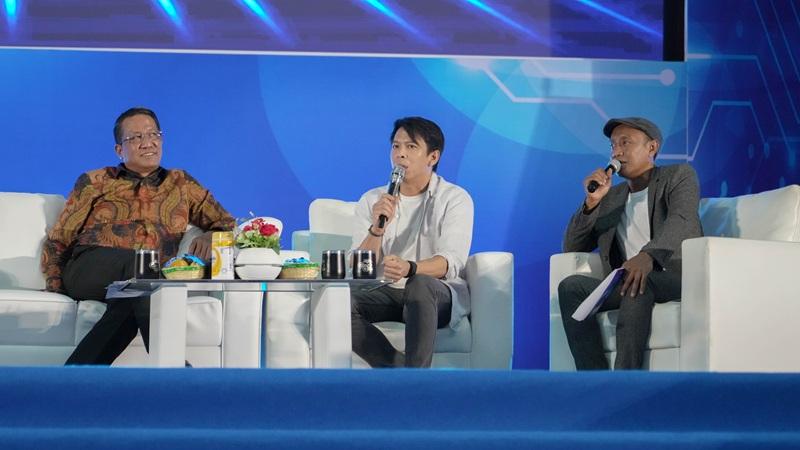
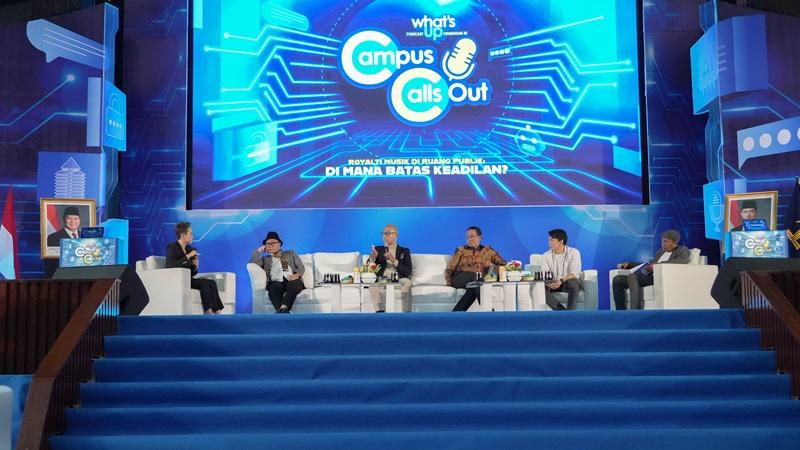
The Minister delivered the message as a speaker in Kemenkum’s “What’s Up Campus Calls Out” Podcast, held offline for the first time at Diponegoro University (Undip), after previously airing 23 online episodes on the ministry’s YouTube channel. This offline edition was designed to provide early legal literacy to university students, especially related to business legality and safety.

“Sharing knowledge on beneficial ownership with students is essential. If they understand this early, especially before their businesses grow, managing and securing their business activities will be easier and safer,” Supratman said at Muladi Dome, Undip, on Wednesday (November 19, 2025).

Undip was selected for the first offline session due to its history of producing prominent legal scholars such as Prof. Satjipto Rahardjo, former Dean of the Faculty of Law at Diponegoro University.

“I don’t think there’s anyone who hasn’t read Prof. Satjipto Rahardjo’s work, and who did not know Prof. Muladi? He was a former Minister of Justice, someone I deeply admire. Alhamdulillah, his long-standing aspiration has finally been realized—the establishment of a National Criminal Code (KUHP), which will take effect on January 2. Undip truly is remarkable,” Supratman said.

Ivan Yustiavandana, Chief of the Indonesian Financial Intelligence Unit (PPATK), explained that implementing beneficial ownership rules is essential to creating a fair business environment.

He said that many entrepreneurs run their businesses properly, relying on their own reputation and managing profits and losses responsibly. But there are others who don’t care about profit at all, because their businesses are actually being used as tools for money laundering.

“If beneficial owners are not regulated, criminals can set up companies that compete unfairly with legitimate businesses. They can sell cheaply because profit isn’t their goal; the business simply serves as a cover for laundering money,” Ivan said.

The Governor of North Maluku, Sherly Tjoanda, underlined the importance of accountability in today’s digital and transparent era. She noted that a business is built on reputation, trust, and credibility, which are far more important than financial capital. She also highlighted that proper documentation—such as company deeds and financial statements—is essential for attracting investors and securing major projects.

Prof. Paramita Prananingtyas, Undip’s Professor of Law, shared that entrepreneurship courses are taught across all study programs at Undip. She said that ethics and transparency must serve as the foundation of any business from the very beginning.

“What’s Up Kemenkum Campus Calls Out” serves as a public dialogue platform aimed at improving students’ understanding of legal regulations in Indonesia. Carrying the theme “From Campus Business to Major Success”, the event brought together government officials, academics, and creative industry actors to discuss integrity, accountability, beneficial ownership, and risks of corruption and money laundering.

The event attracted approximately 2,000 participants, including students, lecturers, ministry staff, young entrepreneurs, startup founders, and the general public, both offline and online. Through interactive sessions and discussions, the program encouraged young people to build lawful, ethical businesses while strengthening collaboration between the government, universities, and industry.

2025 11 19 Podcast 2

2025 11 19 Podcast 3

2025 11 19 Podcast 4

logo besar kuning
 
KEMENTERIAN HUKUM REPUBLIK INDONESIA
PikPng.com school icon png 2780725   Jl. H.R. Rasuna Said, Kec. Kuningan, Kota Jakarta Selatan, Jakarta 12940
PikPng.com phone icon png 604605   021-5253004


facebook kemenkumham   twitter kemenkumham   instagram kemenkumham   Youtube kemenkumham   rss kemenkumham
logo besar kuning
 
KEMENTERIAN HUKUM
REPUBLIK INDONESIA


          rss kemenkumham

  Jl. H.R. Rasuna Said, Kec. Kuningan, Kota Jakarta Selatan, Jakarta 12940
  021-5253004
  rohumas@kemenkum.go.id
  pengaduan.setjen@kemenkum.go.id

Copyright © Pusat Data dan Teknologi Informasi
Kemenkum RI