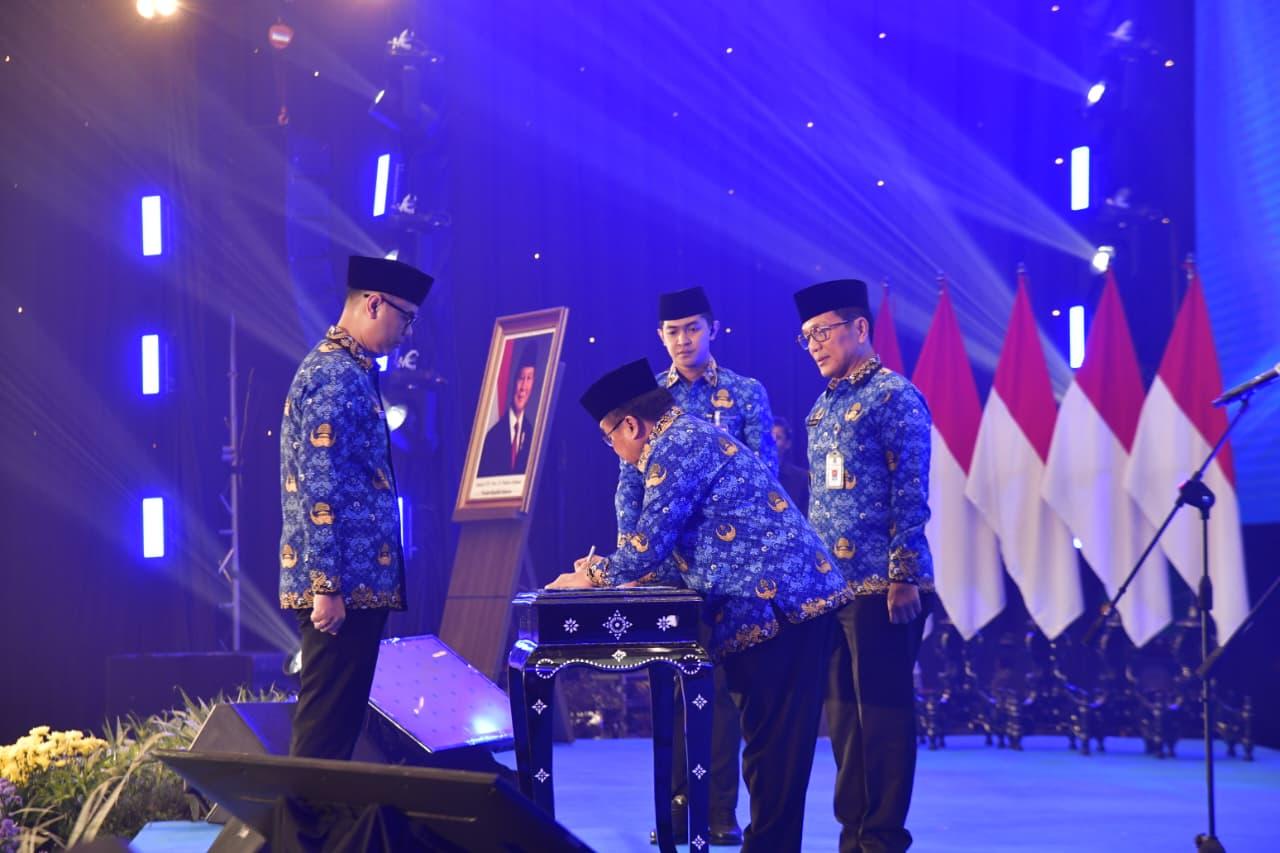
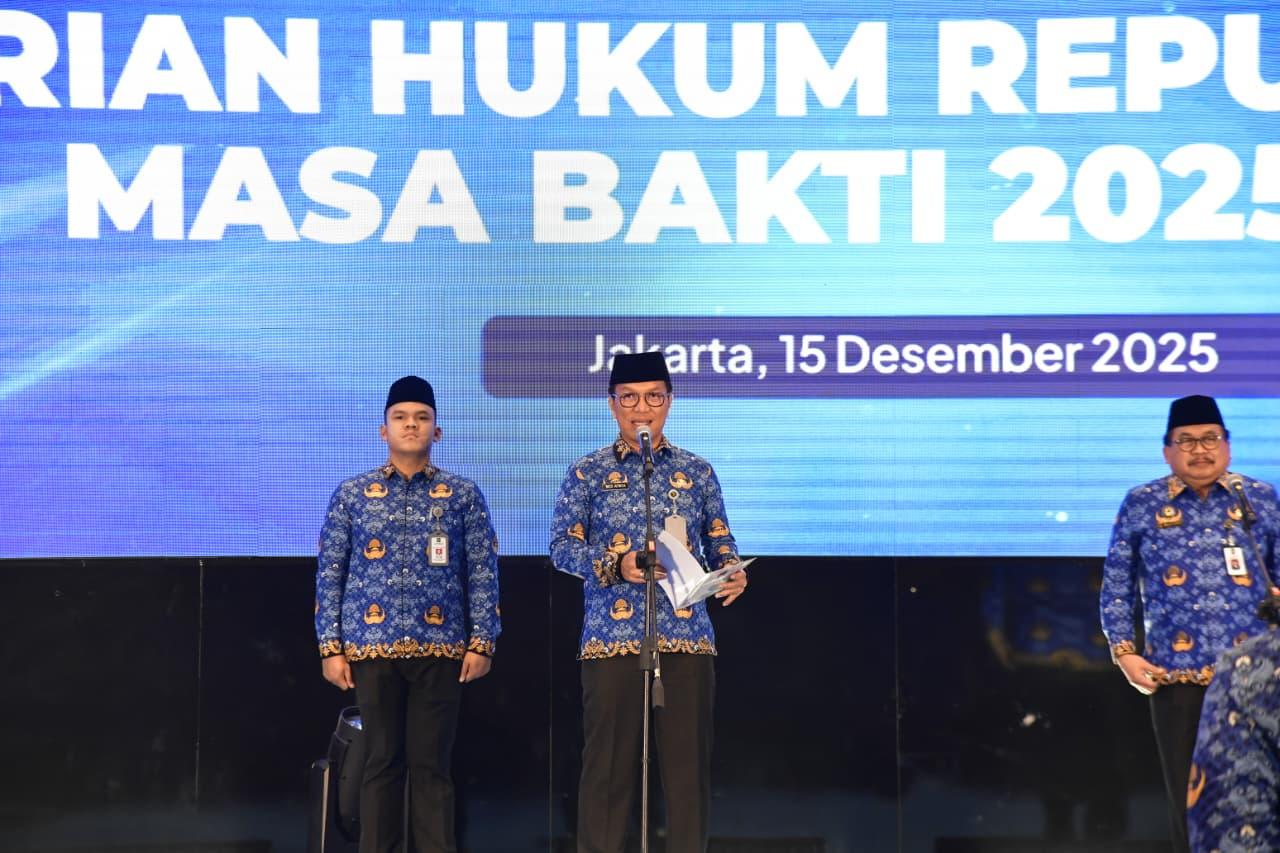
Jakarta — The Indonesian Civil Servants Corps (KORPRI) at the Ministry of Law has officially begun a new term of service following the inauguration of its Executive Board for the 2025–2030 period. The newly appointed leadership is expected to strengthen member development, protection, and welfare in support of government programs.
The inauguration was conducted by Karjono, Head of the ASN Protection Department of the National KORPRI Board, at the Grand Mercure Kemayoran, Jakarta, on Monday (December 15, 2025).
Secretary General of the Ministry of Law, Nico Afinta, who serves as Advisor to KORPRI at the Ministry, urged the new board to promptly formulate strategic initiatives that deliver tangible benefits to members.
He emphasized the importance of careful planning to ensure KORPRI programs effectively address the needs of civil servants, including solutions to official duties and family-related challenges. These commonly include household needs, education costs, healthcare services, and legal issues arising in the course of official responsibilities.
Accordingly, he said, KORPRI Ministry of Law programs should remain relevant to these concerns while staying aligned with the policies and programs of the National KORPRI Executive Board.
Meanwhile, Karjono underscored the importance of KORPRI at the Ministry of Law serving as a role model in upholding integrity and a strong legal culture. He reaffirmed the organization’s commitment to legal certainty and justice by rejecting all forms of corruption, collusion, nepotism, and abuse of authority.
He also stressed that legal protection is provided only to civil servants who perform their duties professionally and with integrity, and not to those proven to have abused their positions or violated the law. Karjono further reminded all officials to ensure that every policy and legal service remains grounded in the Constitution and applicable laws.
As background, KORPRI is the sole professional organization representing all civil servants in Indonesia, including permanent civil servants and government employees with work agreements. It plays a key role in enhancing civil servant welfare through improved public service quality, bureaucratic digitalization, ideological and character development, as well as career protection and legal assistance.