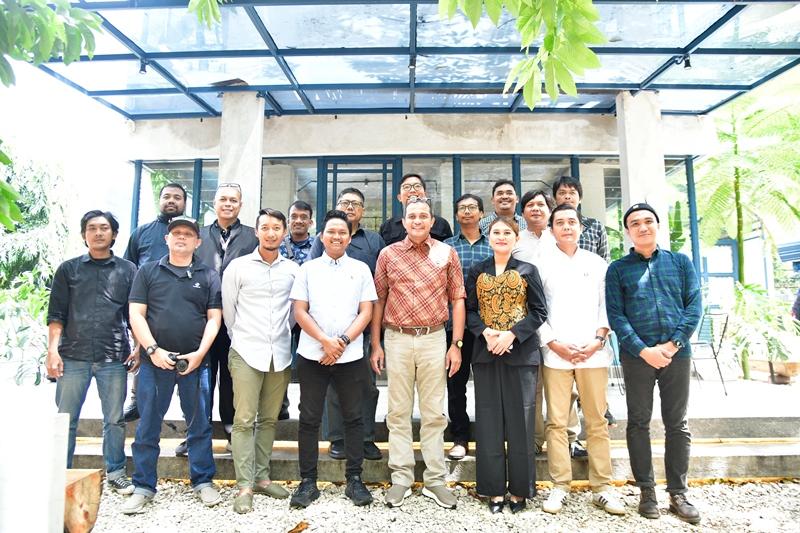
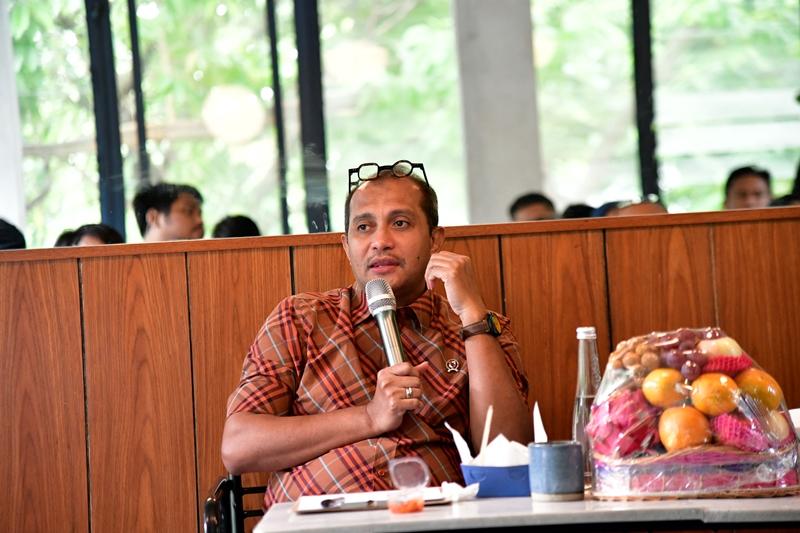
Jakarta – Vice Minister of Law Eddy Hiariej explained that Indonesia’s National Criminal Code (KUHP Nasional) embodies a vision of social reintegration. Set to take effect on 2 January 2026, the new code aims to provide offenders with an opportunity for rehabilitation and reintegration so they can return as productive members of society.
“The essence is social reintegration—how we give people who have made mistakes a chance to repent, improve themselves, be accepted by society, and contribute positively,” Eddy said during a meeting with the Association of Legal Journalists in Jakarta on Tuesday (December 23, 2025).
According to Eddy, the National Penal Code will make Indonesia’s criminal justice system more humane by shifting away from imprisonment as the primary form of punishment. This approach seeks to prevent the negative stigma often attached to offenders, even in cases involving minor crimes.
“When someone returns home after serving a sentence for a minor offense, they are often labeled and avoided as a former inmate, as if there is no room for redemption. Social reintegration is intended to prevent that stigma,” he explained.
Eddy noted that imprisonment will remain reserved for serious crimes carrying lengthy sentences, such as murder and rape. For offenses punishable by no more than five years’ imprisonment, judges may impose supervision penalties, while crimes with a maximum sentence of three years may be subject to community service.
“For example, if an offender has driving skills, they may be assigned to provide public transportation services without pay as a form of punishment, with clear limits so the work does not interfere with their ability to earn a livelihood,” he said.
He added that the National Penal Code no longer views criminal law as a tool of retribution. Instead, it adopts a corrective justice approach through sanctions, restorative justice to address victims’ losses, and rehabilitative justice for both victims and offenders.
“Under the new Penal Code, sanctions are not limited to imprisonment. Judges may impose criminal penalties, corrective measures, or a combination of both, and in some cases, corrective measures without imprisonment,” Eddy explained.
Eddy also pointed out that Indonesia’s sentencing system has lagged more than five decades behind reforms in developed countries. He cited examples from Europe and North America, such as semi-detention—where offenders are detained overnight but allowed to work during the day—and weekend detention.
“For instance, a person convicted of theft and sentenced to two years under a semi-detention system would be confined from 6 p.m. to 6 a.m., while remaining free to work during the day. This supports social reintegration by avoiding stigma,” he said.
In Indonesia, the National Penal Code introduces alternative sanctions such as supervision, community service, and fines. Eddy emphasized that the new code does not weaken criminal law enforcement, but rather strengthens it by making the system more humane.