The New Criminal Code cannot be Enforced without an Updated Criminal Procedure Code

2025 11 10 IKADIN 1

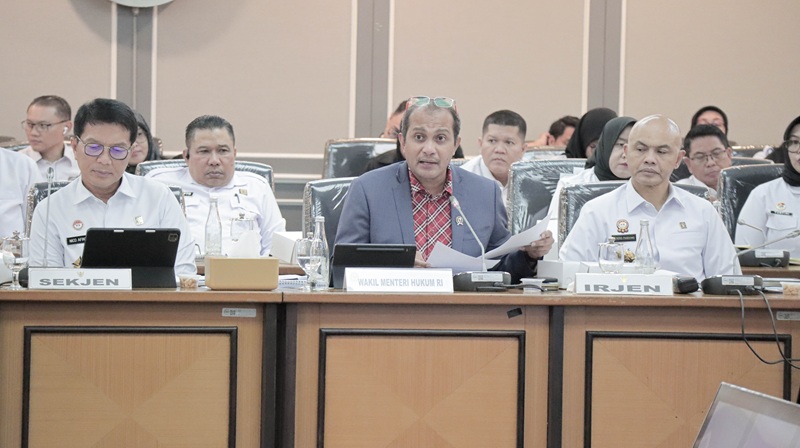
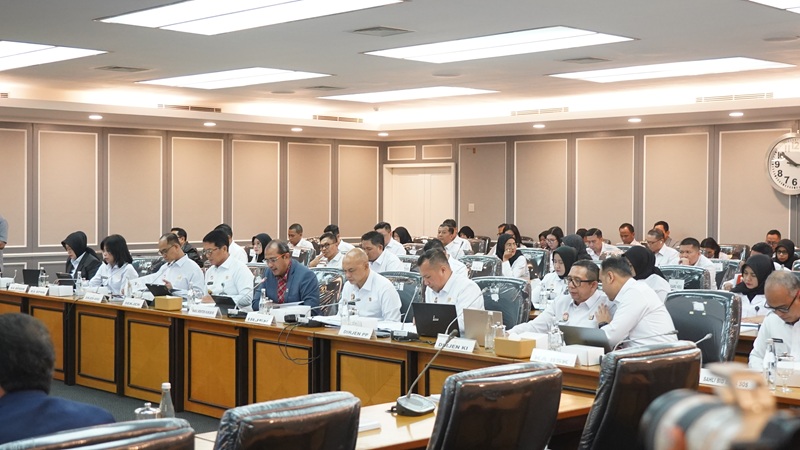
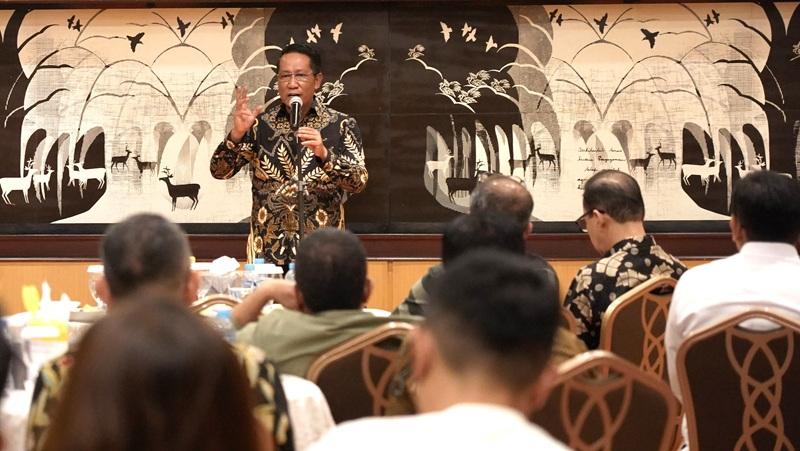
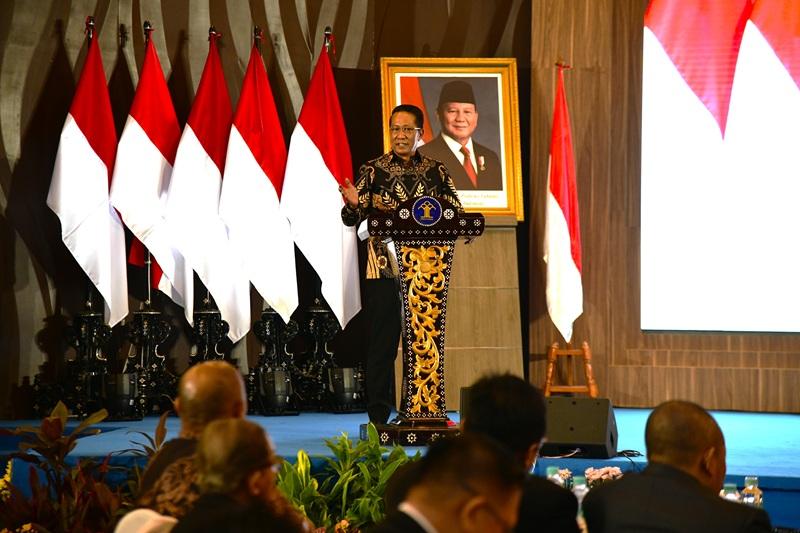
Jakarta – The Vice Minister of Law Edward Omar Sharif Hiariej emphasized that Indonesia’s new Criminal Code (KUHP Nasional) cannot be implemented without an updated Criminal Procedure Code (KUHAP). He explained that several provisions in the new KUHP are not addressed under the current KUHAP.

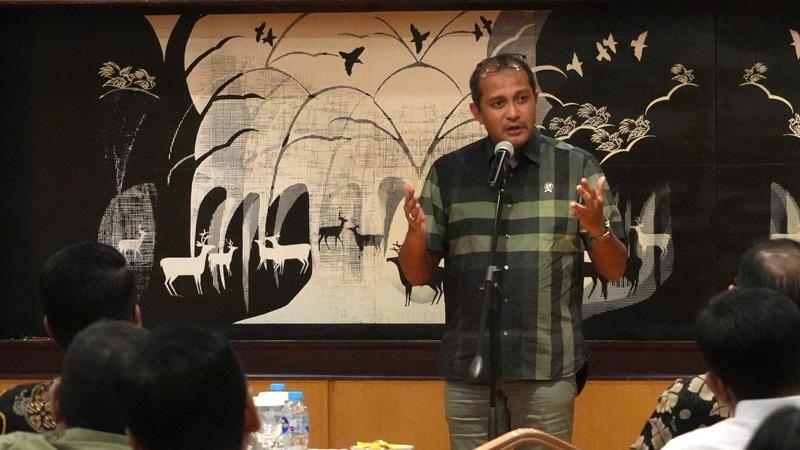
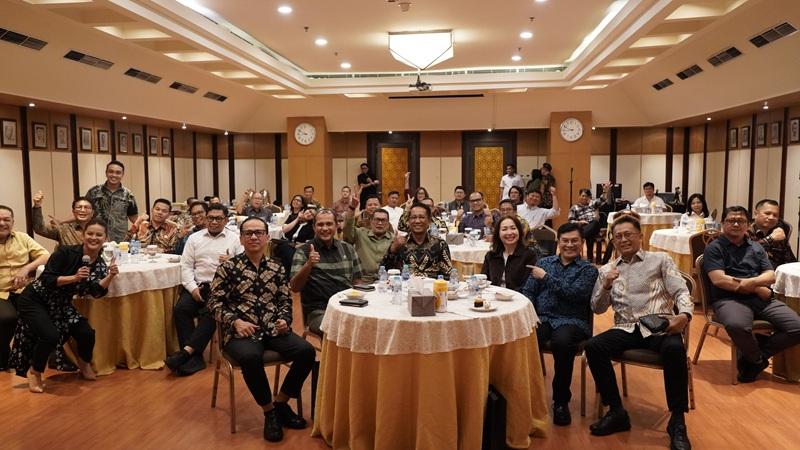
“Without a new KUHAP, many provisions in the new KUHP simply can’t be enforced—such as rules on supervisory punishment, fines, corporate investigations and trials, and even court decisions involving judicial pardon. None of these exist in the old KUHAP,” the Vice Minister said during the National Seminar of the 2025 IKADIN National Working Meeting at The Sultan Hotel & Residence, Jakarta, on Monday (November 11, 2025).

Prof. Eddy explained that the government and Commission III of the House of Representatives (DPR) are currently discussing the new KUHAP, which they aim to approve in the November–December 2025 legislative session. Once approved, the updated KUHAP will allow the new KUHP to be put into effect.

“The government and Commission III aim to approve the new Criminal Procedure Code (KUHAP), so the National Criminal Code (KUHP) can be implemented once it comes into force on January 2, 2026.”

Eddy also highlighted that the new KUHP introduces a standard of sentencing—a set of sentencing guidelines that serve as a reference for judges when deciding penalties or corrective measures.

“For example, if a judge is imposing a penalty, the options may include fines and community service. All of these have clear parameters. Judges still have discretion, but their decisions must align with the sentencing guidelines,” he explained.

He added that the Criminal Adjustment Law (UU Penyesuaian Pidana), which is crucial for implementing the new KUHP, will also be reviewed during the November–December legislative session. The law is relatively short, consisting of only a few articles across three chapters.

“The first chapter aligns the new KUHP with laws outside the KUHP. The Criminal Adjustment Law also fixes typos, incorrect citations, and referencing errors in the new KUHP, such as cases where an article mistakenly refers to the wrong clause. All of this will be corrected through the adjustment law,” Eddy said.

He also noted that there are three implementing regulations under the new KUHP—issued in the form of government regulations—which have been submitted to the President. All three will take effect simultaneously on 2 January 2026.

“The three regulations address the application of living law in society, regulations on penalties and corrective measures, and regulations on sentence commutation,” Eddy concluded.

2025 11 10 IKADIN 2

Supratman Highlights Digitalization and Merit System to Prevent Corruption at the Ministry of Law

2025 11 07 Podcast 1

Jakarta – Minister of Law Supratman Andi Agtas introduced two key strategies to prevent corruption within the Ministry of Law: digitalization of public services and the implementation of a merit-based human resource system. Both initiatives align with the Corruption Eradication Commission (KPK) concept known as the Trisula of Anti-Corruption, which emphasizes balance between enforcement, prevention, and education.

"Since I took office, I have said there are two things we must focus on to fight corruption. The first is fixing the system through digitalization. If we want better governance, there is no other option but to go digital," Supratman said during the What's Up Kemenkum RI podcast, aired on the Ministry's official YouTube channel on Friday (November 7, 2025).

The digitalization project will lead to the creation of a transparent super app, designed based on the architecture of an electronic-based government system. Expected to launch by December 2025 or early January 2026, the super app will integrate all Ministry of Law services online—from registration to final output.

"Everything will be transparent, as part of our effort to prevent irregularities and improve the system. The second strategy is the merit system, which we hope will strengthen integrity over time," Supratman said at the Ministry of Law's Podcast Studio.

The merit system ensures fair and competency-based career development for civil servants. Career advancement will be determined by performance and ability, rather than favoritism or personal connections.

In addition to these two strategies, Supratman also emphasized the importance of regulatory reform as a supporting instrument.

"Our regulations are actually quite solid. The challenge lies in implementation, which depends on commitment. There are areas for improvement, of course. Still, by focusing on these two main strategies, we can build integrity and accountability," he said.

In this podcast episode, Minister Supratman was joined by the Chairman of the Corruption Eradication Commission (KPK), Setyo Budiyanto, who highlighted the strong collaboration between the KPK and the Ministry of Law as a real example of synergy in the fight against corruption.

"Public participation and the involvement of all institutions, including government, are essential—particularly in prevention efforts. Through our memorandum of understanding, there are many areas where we can collaborate," Setyo said.

The partnership between the Ministry of Law and the KPK includes data and information sharing, capacity-building for human resources, strengthening regulations and legal instruments, and extradition efforts.

"This cooperation also involves aligning our internal regulations with those of the Ministry of Law. The goal is to strengthen prevention and education efforts so that issues can be anticipated early, reducing the need for enforcement," Setyo added.

The What's Up Kemenkum RI Podcast airs every Friday to provide the public with information and education about the Ministry's public services. The podcast can be accessed through the Ministry's official social media platforms.

2025 11 07 Podcast 2

CISAC Supports Royalty Transparency in Indonesia

2025 11 03 CISAC 1

Jakarta – The Minister of Law, Supratman Andi Agtas, welcomed a courtesy visit from Benjamin Ng, Regional Director of the Confederation of Societies of Authors and Composers (CISAC) for Asia-Pacific.

During the meeting, CISAC expressed its willingness to support the Indonesian Government—particularly the Ministry of Law—in strengthening copyright regulations and promoting transparency and efficiency in royalty management.

Minister Supratman affirmed that Indonesia and CISAC share the same values of transparency in managing international royalties.

"However, royalty governance in Indonesia still faces challenges in building public trust. This is what we are working to fix," he said.

He emphasized that collective management organizations (LMKs) must submit transparent data on royalty collection and distribution to copyright holders and other relevant parties, to ensure there are no more complaints like those in the past.

CISAC Regional Director Benjamin Ng said Indonesia plays a vital role in ASEAN and is home to many talented artists. Representing the CISAC President, he opened the door for future cooperation to build a stronger music and digital ecosystem.

"CISAC is here to share insights, best practices, and our global experience for the Minister and his team to consider," Benjamin said during the meeting at the Ministry's office in Jakarta on Monday (November 3, 2025).

Benjamin added that CISAC has several ongoing initiatives in Indonesia. Still, one of the most important is to help bring Indonesian music to the global stage.

"Indonesia has incredible artistic talent. CISAC is ready to collaborate to strengthen the country's music and digital ecosystem. We have no barriers to working with the Indonesian Government or LMK," he said.

The CISAC Regional Director further expressed hope that Indonesia would establish stronger copyright regulations, particularly regarding resale rights legislation, which could pave the way for Indonesia to become a regional IP hub. He also noted that Artificial Intelligence (AI) and technology are crucial issues that need to be carefully considered in the upcoming revision of Indonesia's Copyright Law.

"AI and technology issues must not be overlooked," he noted.

In response, Minister Supratman stated that his office is open to collaborating with other partners in drafting the Copyright Law. He also emphasized the Indonesian Government's commitment to strengthening the national copyright ecosystem, in line with President Prabowo Subianto's priorities on bureaucratic reform, regulatory improvement, and national digital transformation.

"Copyright protection, digital distribution, fair monetization, and transparent royalty governance are urgent issues. Under President Prabowo's leadership, we are upholding integrity and transparency as the foundation to combat corruption and strengthen Indonesia's creative system," Supratman stated.

He also introduced the Jakarta Protocol, an initiative by the Indonesian Government to promote global creative economic justice. The Jakarta Protocol, which will be presented to WIPO, aims to encourage fair digital royalty systems, ensure transparency in algorithms and distribution, promote a cross-border royalty payment system, and protect creators, especially from the Global South.

"Indonesia wants to ensure that international rules do not only benefit developed countries and global platforms. The Jakarta Protocol aims to promote fair and equitable royalty distribution, especially for creators from developing countries," Supratman affirmed.

The meeting concluded with a shared commitment to build a transparent, credible, and modern royalty system, and to promote Indonesian creative works on the world stage.

"We are building a creative ecosystem that is fair, trustworthy, and world-class. Transparency is not an option—it's the foundation," Minister Supratman concluded.

2025 11 03 CISAC 2

267 Legal Aid Posts Established in Jakarta to Ensure Equal Access to Justice

2025 10 31 Posbankum DKI 1

Jakarta – Minister of Law Supratman Andi Agtas officially opened 267 Legal Aid Posts (Posbankum) across all subdistricts in the Special Capital Region of Jakarta. He said this achievement reflects the government’s genuine commitment to ensuring equal access to justice, especially for vulnerable communities.

According to Supratman, the presence of Posbankum is essential in Jakarta, a city of tens of millions of residents facing various legal challenges.

“The 267 Legal Aid Posts in Jakarta may appear small compared to other provinces. However, Jakarta is home to tens of millions of residents with diverse and complex legal issues, from minor cases to major disputes,” said Supratman during the opening of the Legal Aid Posts held at Balai Agung, Jakarta City Hall, on Friday (October 31, 2025).

He explained that the role of Posbankum goes beyond handling legal cases; it also includes providing legal consultation. He added that the true purpose of justice is not merely case resolution, but resolving disputes effectively before they reach the courts.

Supratman further stated that the Ministry of Law, through the National Law Development Agency (BPHN), aims to establish 7,000 Posbankum nationwide by the end of 2025. As of the end of October, collaboration among the Ministry of Law, the Ministry of Home Affairs, the Supreme Court, the Ministry of Villages, and regional governments has resulted in 57,968 Posbankum across Indonesia.

“It takes wisdom and institutional strength to resolve the fundamental issues faced by society. The establishment of Posbankum embodies the spirit of gotong royong or cooperation, reflecting collective awareness and our shared commitment to ensuring access to justice for vulnerable communities,” said the Minister of Law.

Meanwhile, Governor of Jakarta Pramono Anung expressed his appreciation for the establishment of Posbankum, noting that Jakarta now has three community service teams: the White team for community health services, the Orange team for public sanitation, and the Blue team for flood control.

“Until now, Jakarta didn’t have a team specifically dedicated to legal aid services. I truly appreciate and welcome this program, which is also part of President Prabowo Subianto’s priority agenda under Asta Cita, particularly in expanding legal aid,” he said.

“The people at the grassroots level cannot obtain the fairest possible justice, and this is the gap that legal aid seeks to fill in Jakarta,” he added.

Sherly Tjoanda Laos, the Legal Aid Ambassador and Governor of North Maluku, highlighted the importance of maintaining fairness in the legal system.

“Law functions both as a compass and as justice. Without direction, we become lost, and without justice, the law loses its purpose. It is our duty to restore justice to society. Let us nurture this spirit and remember that justice is not the work of one institution alone, but a shared commitment,” said Sherly.

With the establishment of 267 Posbankum in Jakarta, the total number of Legal Aid Posts nationwide has now reached 57,968, covering about 69.05 percent of Indonesia’s 83,953 villages and subdistricts.

2025 10 31 Posbankum DKI 2

2025 10 31 Posbankum DKI 3

Music Community Supports the Ministry's Efforts to Improve Royalty Governance

2025 10 31 Pertemuan Terbuka 1

Jakarta – The Ministry of Law held an open meeting between the Minister of Law and members of Indonesia's music industry to discuss reforms to the country's royalty governance system on Friday (October 31, 2025).

The discussion brought together songwriters, composers, singers, representatives from collective management organizations (LMK), the National Collective Management Agency (LMKN), national artists, relevant ministries, and media representatives.

Minister of Law Supratman Andi Agtas emphasized that improving royalty governance requires collaboration among all stakeholders, grounded in principles of fairness and transparency.

"When it comes to royalties, the Ministry, stakeholders, and our musicians must come together and speak openly from the heart. The Ministry of Law needs to listen to the voices of the musicians here today," Supratman said during the discussion at the Ministry's office.

He explained that a transparent royalty system is key to sustaining creativity within the music industry. With strong legal protection and fair economic value, creative works can continue to grow and enrich the nation's cultural landscape.

"The problem doesn't lie with the industry or the creators—it's with the ecosystem that manages royalties. That's why we all have a responsibility to fix the system," he said.

Minister Supratman also ensured that LMKN and LMK will now operate under a more transparent system. Under the new arrangement, the authority to collect and distribute royalties has been separated. LMKN is responsible for the collection, but it cannot distribute to rights holders directly.

"President Prabowo has made it clear that there must be zero tolerance for misuse or taking what belongs to others. We are creating a check-and-balance system between LMKN and LMK to ensure transparency," he explained.

The Minister also encouraged LMK to publish their financial reports regularly and urged creators to authorize the distribution of their royalties only through responsible organizations.

During the session, several music industry figures expressed appreciation for the Ministry's initiative. Erens, a songwriter, supported the Minister's initiative for greater transparency through regular audits of LMK and suggested that the government set fairer copyright registration fees for local songwriters.

Armand Maulana, one of Indonesia's prominent musicians, also welcomed the open discussion, calling it the first of its kind in many years of royalty disputes. He expressed his support for the Ministry's commitment to improving transparency in royalty management.

Meanwhile, Dharma Oratmangun, an Indonesian musician and former head of KCI and LMKN, voiced his support for the government's plan to streamline royalty collection through a one-gate system managed by LMKN.

"We fully support the effort to reform royalty collection, especially in the digital sector. The digital royalty system must operate through LMKN as a single, centralized channel," said Dharma, who was joined by Yessi Kurniawan (LMK SELMI), Henry Noya (LMK PROINTIM), Yuke NS (LMK TRI), and other music industry representatives.

2025 10 31 Pertemuan Terbuka 2

logo besar kuning
 
KEMENTERIAN HUKUM REPUBLIK INDONESIA
PikPng.com school icon png 2780725   Jl. H.R. Rasuna Said, Kec. Kuningan, Kota Jakarta Selatan, Jakarta 12940
PikPng.com phone icon png 604605   021-5253004


facebook kemenkumham   twitter kemenkumham   instagram kemenkumham   Youtube kemenkumham   rss kemenkumham
logo besar kuning
 
KEMENTERIAN HUKUM
REPUBLIK INDONESIA


          rss kemenkumham

  Jl. H.R. Rasuna Said, Kec. Kuningan, Kota Jakarta Selatan, Jakarta 12940
  021-5253004
  rohumas@kemenkum.go.id
  pengaduan.setjen@kemenkum.go.id

Copyright © Pusat Data dan Teknologi Informasi
Kemenkum RI