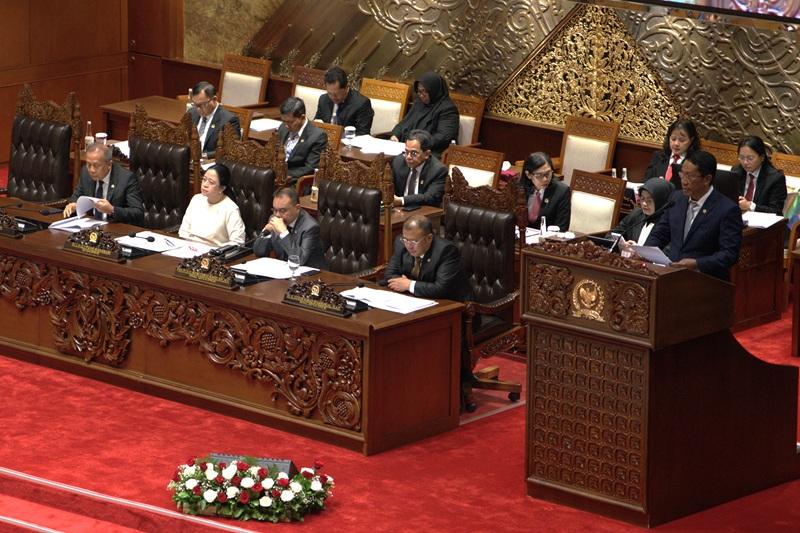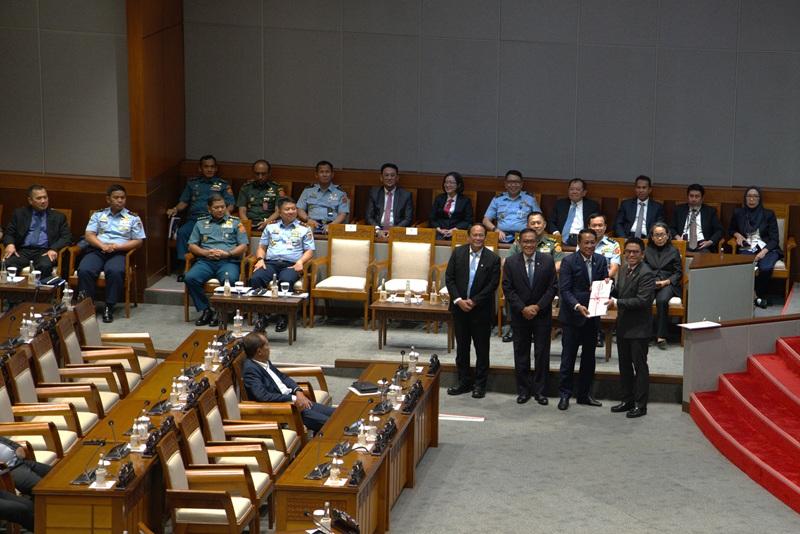
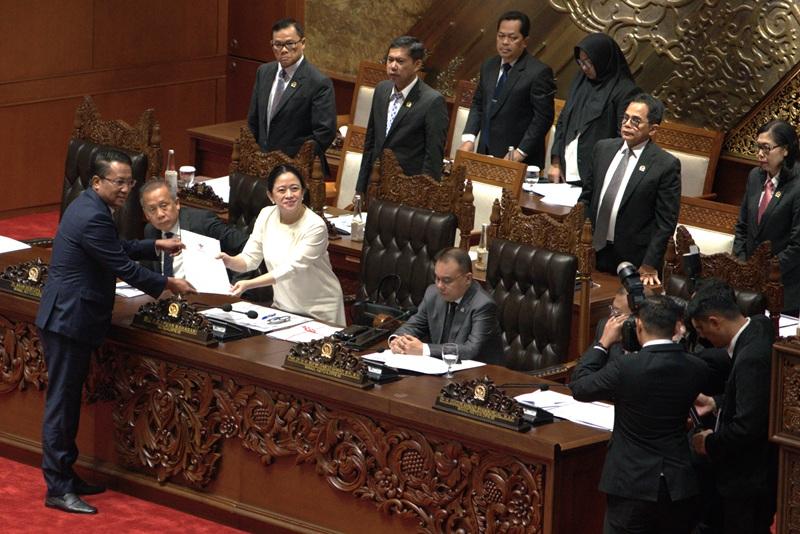
Jakarta – The Bill on Airspace Management has been officially passed during a plenary session between the Government and the House of Representatives (DPR RI). This new law will serve as the legal framework for managing Indonesia’s airspace, including the regulation of air vehicles and aircraft.
Minister of Law, Supratman Andi Agtas, stated that the bill addresses several urgent issues, such as violations of Indonesia’s airspace by foreign aircraft or air vehicles, including breaches of restricted or prohibited air zones.
“Currently, Indonesia does not have clear regulations on airspace violations in its positive law. This bill introduces criminal sanctions for airspace violations, which until now have only been subject to administrative penalties,” Supratman explained as he delivered the President’s final remarks on the bill.
The bill also fulfills the mandate of Law No. 6 of 2023, which ratified the Government Regulation in Lieu of Law (Perppu) No. 2 of 2022 on Job Creation. That law requires the establishment of a law governing airspace management as part of the national spatial planning system.
“Another urgent need is the absence of rules governing the use of unmanned air vehicles and aircraft—such as drones—whether operated by the public or government agencies for various purposes,” Supratman added during the plenary session on Tuesday (25/11/2025).
Endipat Wijaya, Chair of the Special Committee for the Airspace Management Bill, noted that discussions on the bill had taken place since the 2019–2024 DPR term. The bill was designated as a carry-over item in the 2025 Priority National Legislation Program (Prolegnas) and the 2025–2029 Prolegnas.
The Airspace Management Bill consists of 8 chapters and 63 articles, covering areas such as airspace management operations; funding; investigation, prosecution, and court proceedings; as well as criminal provisions.
“The bill contains 581 problem inventory items (DIM), including 353 items on the main articles, 205 explanatory items, and 23 new proposals submitted by DPR factions and the government,” Endipat explained.