
Jakarta – The Bill on Criminal Adjustment has become priority and must be passed before the National Criminal Code (KUHP) takes effect on 2 January 2026. The law is needed to prevent legal uncertainty, overlapping regulations, and sentencing disparities across different sectors.
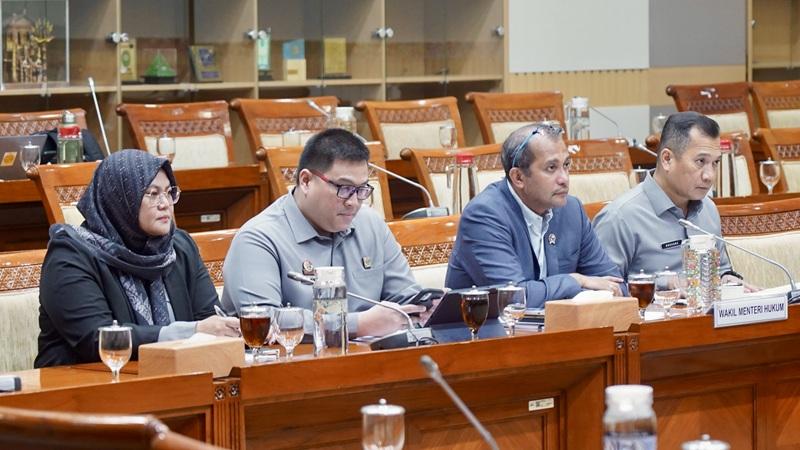
The Vice Minister of Law, Edward Omar Sharif Hiariej, conveyed this during a meeting between the Government and the House of Representatives (DPR RI) on the discussion of the Criminal Adjustment Bill.
According to the Vice Minister, the bill is necessary to respond to rapid social changes and the need to harmonize Indonesia’s sentencing framework.
The Vice Minister of Law stated that the formation of the Bill on Criminal Adjustment is also based on the consideration of the rapid social changes, as well as the need for harmonization of the criminal sentencing system.
“These developments require the government to reorganize criminal provisions in sectoral laws and regional regulations so they align with the principles, structure, and philosophy of sentencing under the new Criminal Code,” said Eddy during the meeting at Commission III of the DPR RI on Monday (November 24, 2025).
He underlined that the new KUHP abolishes short-term imprisonment as a principal punishment, meaning that all short-term imprisonment must be converted and adjusted accordingly.
Eddy further explained that the development of the Bill on Criminal Adjustment is a strategic step to strengthen Indonesia’s criminal justice system as a whole. The aim is to ensure that the national sentencing system is implemented effectively, proportionally, and in line with societal developments.
“This bill is designed to harmonize criminal provisions in laws outside the KUHP, in regional regulations, and within the KUHP itself, so that they are aligned with the new sentencing system,” Eddy added.
“These adjustments reflect the state’s commitment to ensuring that all criminal provisions operate within a unified, consistent, and modern legal framework.”
The bill consists of three main chapters, Chapter I covers adjustments to criminal provisions in laws outside the KUHP, Chapter II regulates adjustments to criminal provisions in regional regulations, and Chapter III outlines adjustments and refinements to the new National Criminal Code.