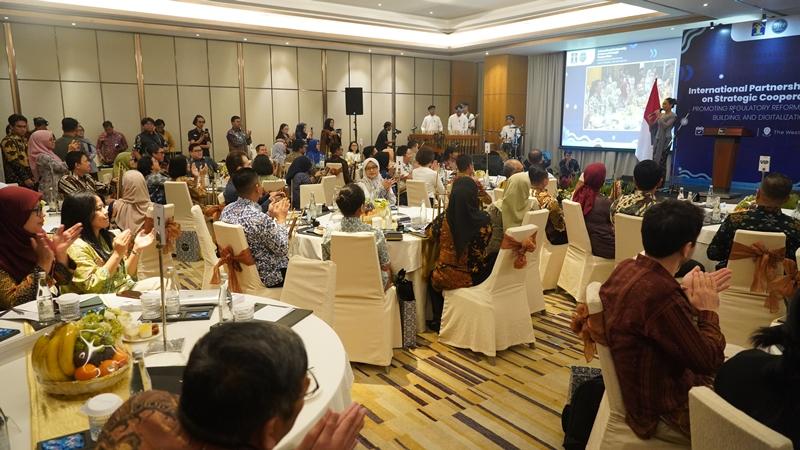
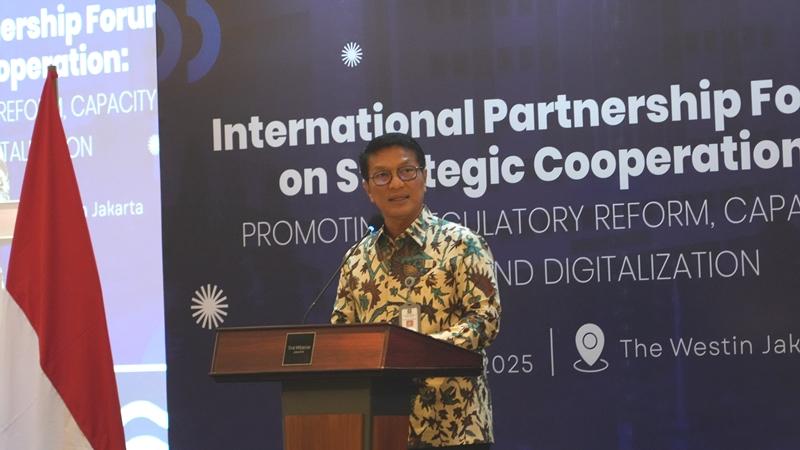
Jakarta — Secretary General of the Ministry of Law, Nico Afinta, said that Indonesia is undertaking a comprehensive regulatory reform effort—one that is expected to make the country’s regulatory framework fairer and more beneficial for the public.
“Regulatory reform is not only about reducing administrative burdens. It’s also about ensuring that every regulation truly delivers benefits, is fair, and supports economic growth and public welfare,” Nico said during a meeting with international partners at the Westin Hotel Jakarta on Friday (05/12/2025).
Nico explained that Indonesia’s regulatory reform focuses on four main areas: simplifying and harmonizing regulations, strengthening institutions, advancing digitalization, and expanding public participation.
One of the Government’s key reforms is the enactment of the new National Criminal Code (KUHP), which will officially take effect on 2 January 2026.
According to Nico, the KUHP was drafted to reflect developments in criminal law, evolving societal values and norms, and the realities of Indonesian society—while also reinforcing national sovereignty.
“The KUHP establishes the foundation for Indonesia’s national criminal law system. It embodies our commitment to decolonizing the colonial-era code, democratizing criminal law, consolidating legal principles, and aligning with modern legal developments,” he said.
Beyond regulatory reform, the Ministry’s cooperation with international partners also extends to digital transformation and human resource development.
Nico noted that digitalization offers major opportunities for economic growth, greater efficiency, and community empowerment. For this reason, the Government is strengthening digital infrastructure, building an innovation-friendly ecosystem, and enhancing human resource capabilities.
“We are not only focusing on developing hard skills, but also soft skills such as leadership, communication, creativity, and critical thinking,” he added.
Nico expressed hope that partnerships with international stakeholders will become more impactful and aligned with Indonesia’s national priorities, while opening new opportunities for collaboration.
“We believe today’s meeting will serve as a solid foundation for future strategic steps. The Government remains committed to transparency, improving program effectiveness, and ensuring that all forms of support truly benefit the public—especially the most vulnerable,” he concluded.