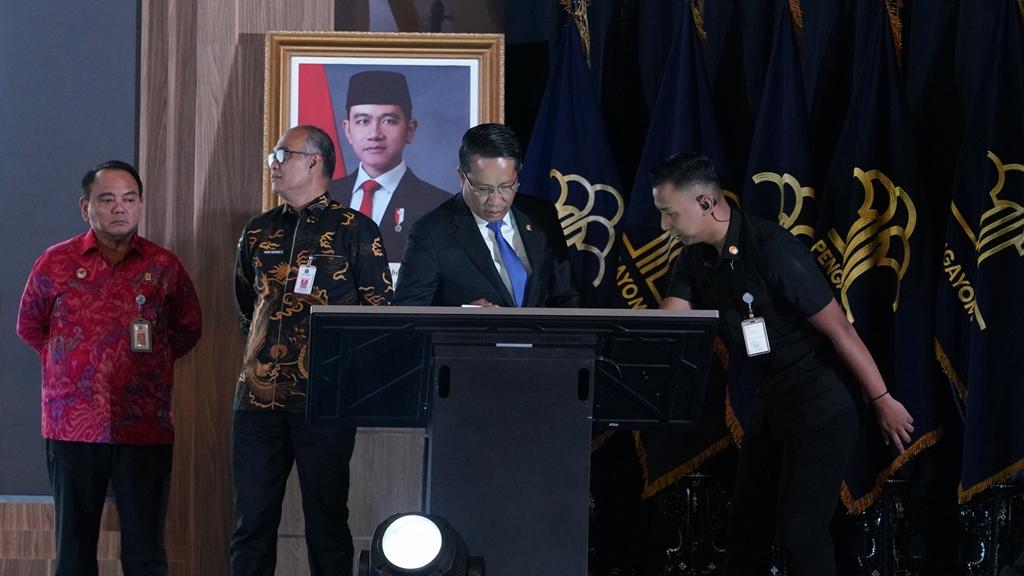
Jakarta – The Ministry of Law (Kemenkum) continues to strengthen its efforts to develop Integrity Zones (ZI) toward Corruption-Free Areas (WBK) and Clean and Serving Bureaucracy Areas (WBBM). This commitment was marked by the signing of a joint declaration between the Minister of Law and senior officials on the development of Integrity Zones and the 2026 performance agreement.
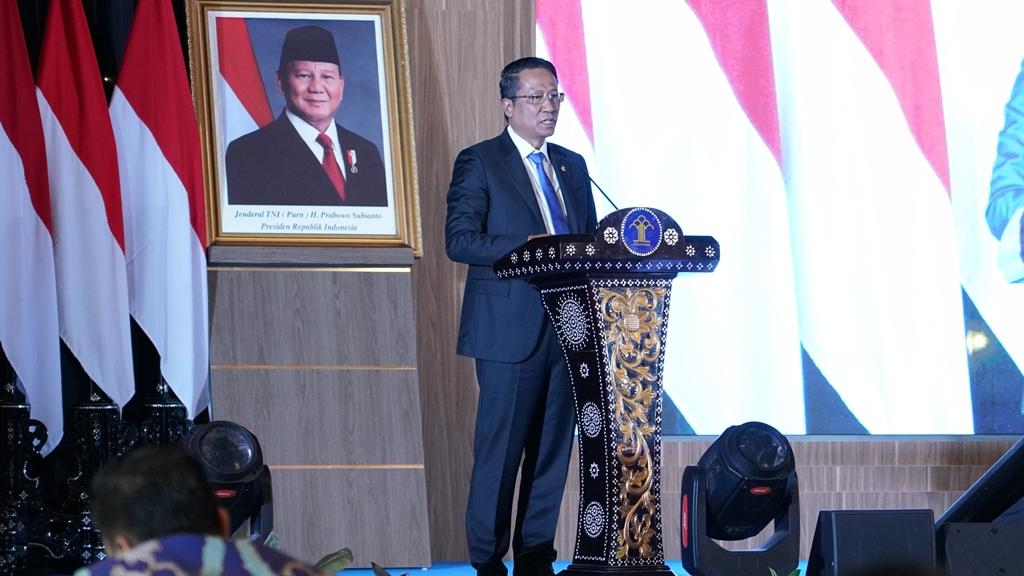
Minister of Law Supratman Andi Agtas outlined two key strategies for building Integrity Zones. The first is digital transformation to create public services that deliver real value to the community. He emphasized that public service is not merely about developing systems, but about ensuring tangible benefits for service users.
“Success should not be measured by how many systems are built, but by the value experienced by the public as service users. Making digital transformation a shared awareness in delivering public services is therefore the right path,” Supratman said at the Ministry of Law office on Thursday (8 January 2026).
Through digital transformation, Supratman aims to embed the principles of WBK and WBBM as a culture across all public services within the Ministry. Within just one year of implementation, digital transformation has produced concrete results. In the field of legislation, for example, the Ministry has introduced the e-harmonization application, which significantly accelerates the legislative harmonization process.
“Colleagues in several regional offices are now able to complete harmonization within a single day,” he noted during the signing ceremony.
Another example can be seen in the provision of free legal aid. The Ministry has developed a system that enables monitoring of the number and types of legal cases handled by community mediators at the village and sub-district levels.
The second strategy focuses on fostering an innovative work culture. To encourage creativity among employees, Supratman has introduced special promotions for those who successfully develop innovations in public service delivery.
“With special career advancement opportunities, employees are motivated to compete in creating innovations that significantly improve public services. Recognition is not limited to certificates, but also includes career progression,” he explained.
Supratman explained that both digital transformation and an innovative work culture are aimed solely at delivering meaningful public services to the community.
“We are building systems aligned with our vision of Integrity Zones. Once the public truly feels the benefits of these systems, leadership succession will no longer be a concern, because the value is already embedded. This is our grand aspiration at the Ministry of Law,” he concluded.