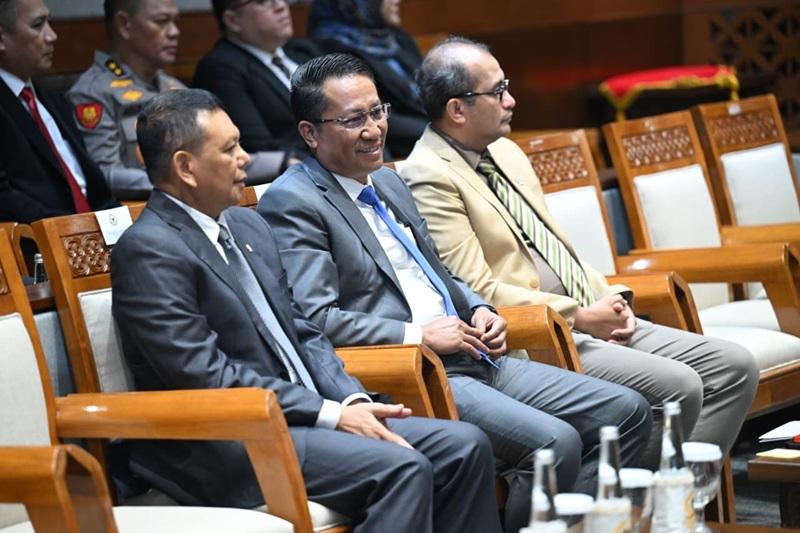
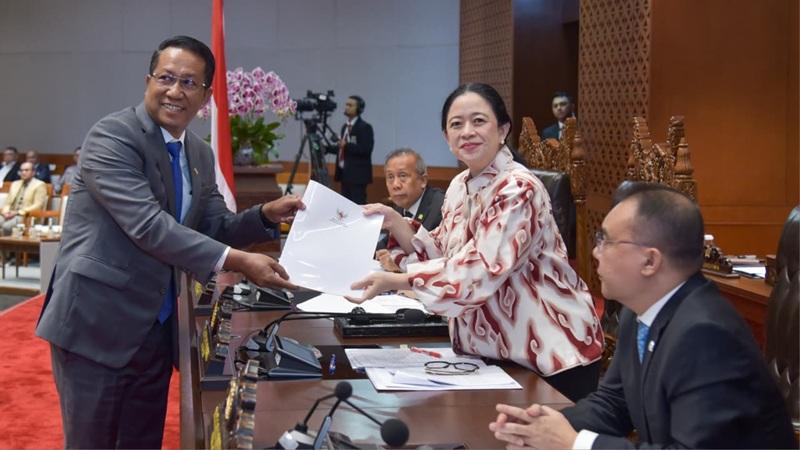
Jakarta – The Bill on the Criminal Procedure Code (RKUHAP) has officially been passed into law. The approval was given during the 8th Plenary Session of the Indonesian House of Representatives (DPR RI) for the 2025–2026 legislative period on Tuesday (November 18, 2025).
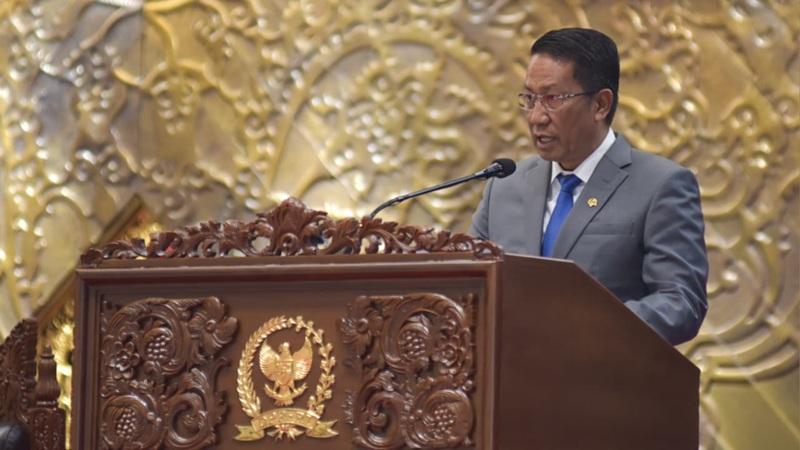
Minister of Law, Supratman Andi Agtas, explained the urgency behind the approval through the reading of the President’s Final Statement on the RKUHAP.
“On behalf of the President of the Republic of Indonesia, we view the reform of the criminal procedure system as a crucial agenda for strengthening the national legal framework. For this reason, we drafted the RKUHAP comprehensively, transparently, and through a participatory process,” Supratman said.
He noted that the drafting process involved a broad range of stakeholders, including academics, legal practitioners, law enforcement agencies, professional organizations, legal aid institutions, civil society groups, and vulnerable communities.
“We gathered input from all segments of society through working meetings, public consultations, and national discussions to ensure that the final provisions reflect public needs and respond to modern legal and technological developments,” he emphasized.
The Minister expressed hope that the new Criminal Procedure Code will deliver stronger justice for citizens.
“With this reform, we hope the criminal procedure system becomes more responsive to contemporary challenges, fairer for citizens, and firmer against abuses of authority,” Supratman concluded.
At the same session, Chair of Commission III of DPR RI, Habiburokhman, acknowledged that the government continues to receive both criticism and support regarding the passage of the bill.
“The drafting of RKUHAP was not rushed. It took more than a year. Therefore, both criticism and support are natural in Indonesia’s democratic process,” he said.
The new Criminal Procedure Code introduces a number of fundamental reforms designed to modernize Indonesia’s criminal justice system. Key changes include stronger human rights protections, the modernization and digitalization of legal processes, tighter oversight through judicial authorization mechanisms, and a strengthened role for pretrial review.
The draft also introduces several new concepts, such as plea bargaining and Deferred Prosecution Agreements (DPA), the application of restorative justice mechanisms, criminal liability for corporations, enhanced roles for legal counsel, and full alignment with the new Criminal Code (KUHP).
The revision of the bill has been under discussion in Commission III since February 2025, following the academic paper and draft prepared by the House Expertise Body (BKD) in November 2024.
The bill reached its final decision during the Commission III Plenary Meeting on 13 November 2025, where eight factions agreed to bring it to the second-level deliberation— the plenary session—after consultation with government ministries, public institutions, academics, civil society groups, and various organizations.