
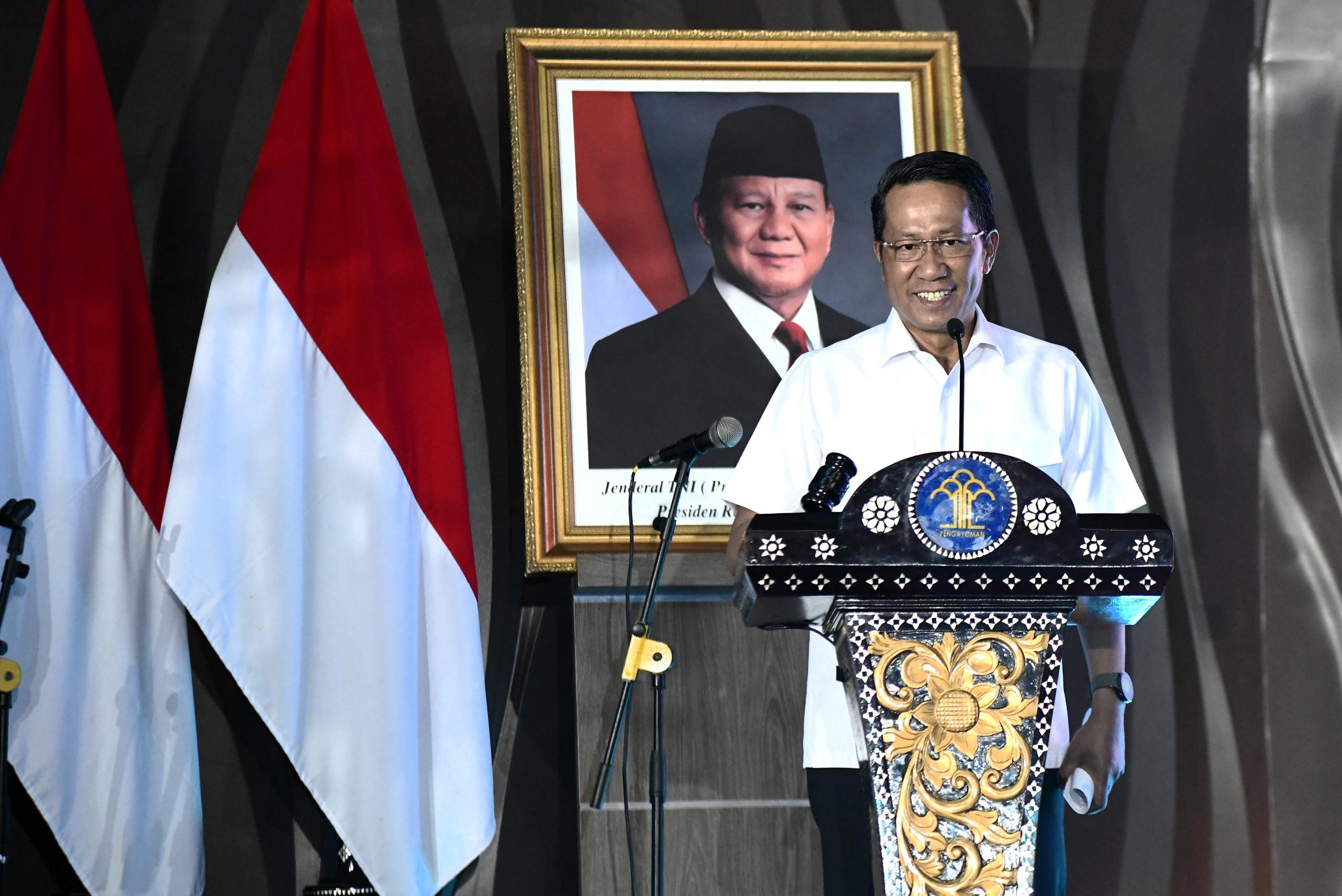
Jakarta — The Ministry of Law has recorded a series of performance achievements in delivering legal services to the public over the past year, from October 1, 2024, to October 1, 2025. Minister of Law Supratman Andi Agtas stated that the Ministry's performance has increased compared to the previous period.
In the Legal Administrative (AHU) sector, the Ministry completed 17,773,269 applications out of a total of 17,829,793 received, achieving a 99.68% completion rate. This figure increased from October 2023 to October 2024, during which 14,177,385 service applications were received and 14,124,695 were completed.
From the overall AHU services, non–tax state revenue (PNBP) reached Rp1,212,169,274,859, an increase of 4.85% from the previous period's Rp1,156,097,445,512.
"The increase in applications and PNBP in the AHU sector occurred because this year the Ministry has digitized AHU services, making them faster and easier to access," said Supratman at the Ministry's office, Monday (October 20, 2025).
Furthermore, in the Intellectual Property (IP) sector, the Ministry received 387,140 applications, an increase of 16.40% from the previous period, which totaled 332,594. During the same period, the Ministry completed 409,819 applications, including unresolved backlogs.
Regarding PNBP, IP services contributed Rp958,530,465,167 over the past year, reflecting a 5.18% increase from the previous period's Rp911,363,891,569.
"Not only AHU services, but IP services have also undergone digital transformation, including trademarks, patents, copyrights, and geographical indications," he said.
In the legislation sector, the Ministry completed 11,191 harmonization processes out of 11,392 submissions. This achievement marks an increase from the previous period, when 9,973 harmonizations were completed from 10,000 submissions.
"This year, the Ministry launched the e-Harmonization application. Ministries, institutions, and regional governments can submit, review, and align draft regulations in a more structured and well–documented manner. The public can also provide input on draft regulations," said Supratman.
In the national law development sector, the Ministry provided 6,507 litigation legal aid services and 2,372 non-litigation legal aid services. According to Supratman, this was supported by the establishment of Legal Aid Posts (Posbankum) in villages and sub–districts. The Ministry targeted 7,000 Posbankum this year; as of October 2025, the number has surpassed the target, reaching 40,714.
"Posbankum provides four services: legal information and consultation; legal aid and advocacy; mediation; and lawyer referral services. They are supported by legal counselors, internship students, village heads, sub–district heads, as well as Babinsa and Bhabinkamtibmas officers," explained the Minister, who holds a doctorate in law.
In the policy strategy sector, the Ministry conducted policy analysis on 65 current issues. It also carried out studies to support 28 regulatory drafting programs, serving as planning instruments for the formulation of Government Regulations (PP) and Presidential Regulations (Perpres). The Ministry also provides a legal journal service accessible to the public.
In human resources development, 50,231 participants enrolled in training programs through webinars, classroom sessions, MOOCs, Communities of Practice (CoP), distance learning, and hybrid formats.
In the Secretariat sector, the Ministry continues to implement bureaucratic reforms to create good governance, prevent irregularities, and improve public services. The Ministry's bureaucratic reform index currently stands at 90.38. The Ministry also promotes the use of domestic products, reaching 72.88% utilization.
The Minister added that the Inspectorate General has followed up on 513 findings and 1,092 recommendations from the Supreme Audit Agency (BPK).
Supratman emphasized that the Ministry continues to provide quality, transparent, and accountable services to ensure legal certainty for the public. Digital transformation is a strategic step in the Ministry's public service reform. He aims to have all Ministry services fully digital by 2026.
"Digital transformation is our commitment to ensure certainty in every service including certainty of time, cost, information, and access for all," Supratman concluded.