Jakarta – Minister of Law Supratman Andi Agtas emphasized that the implementation of Indonesia’s new National Criminal Code (KUHP) and Criminal Procedure Code (KUHAP) is a strategic instrument to support national food and energy sovereignty.
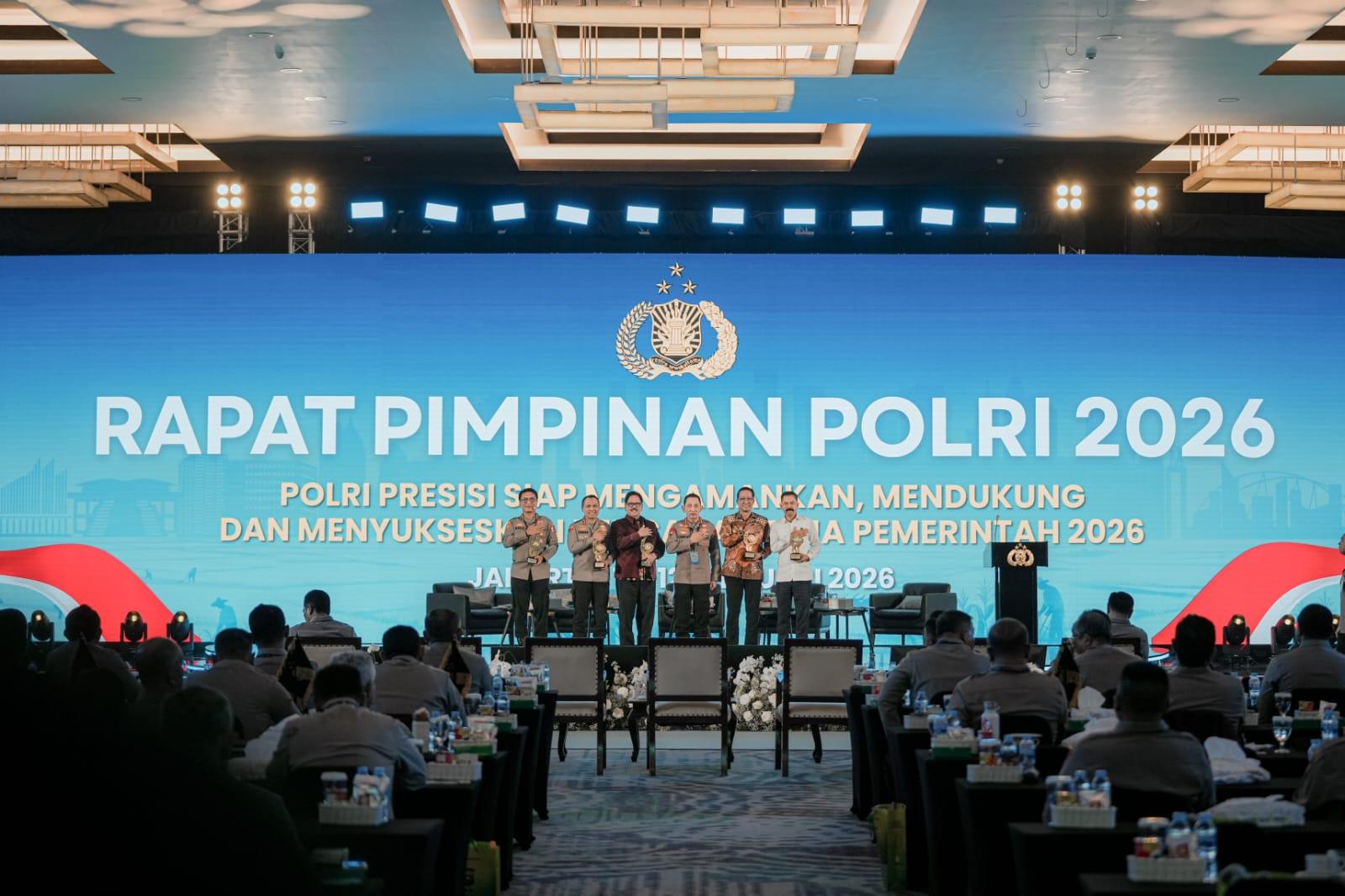
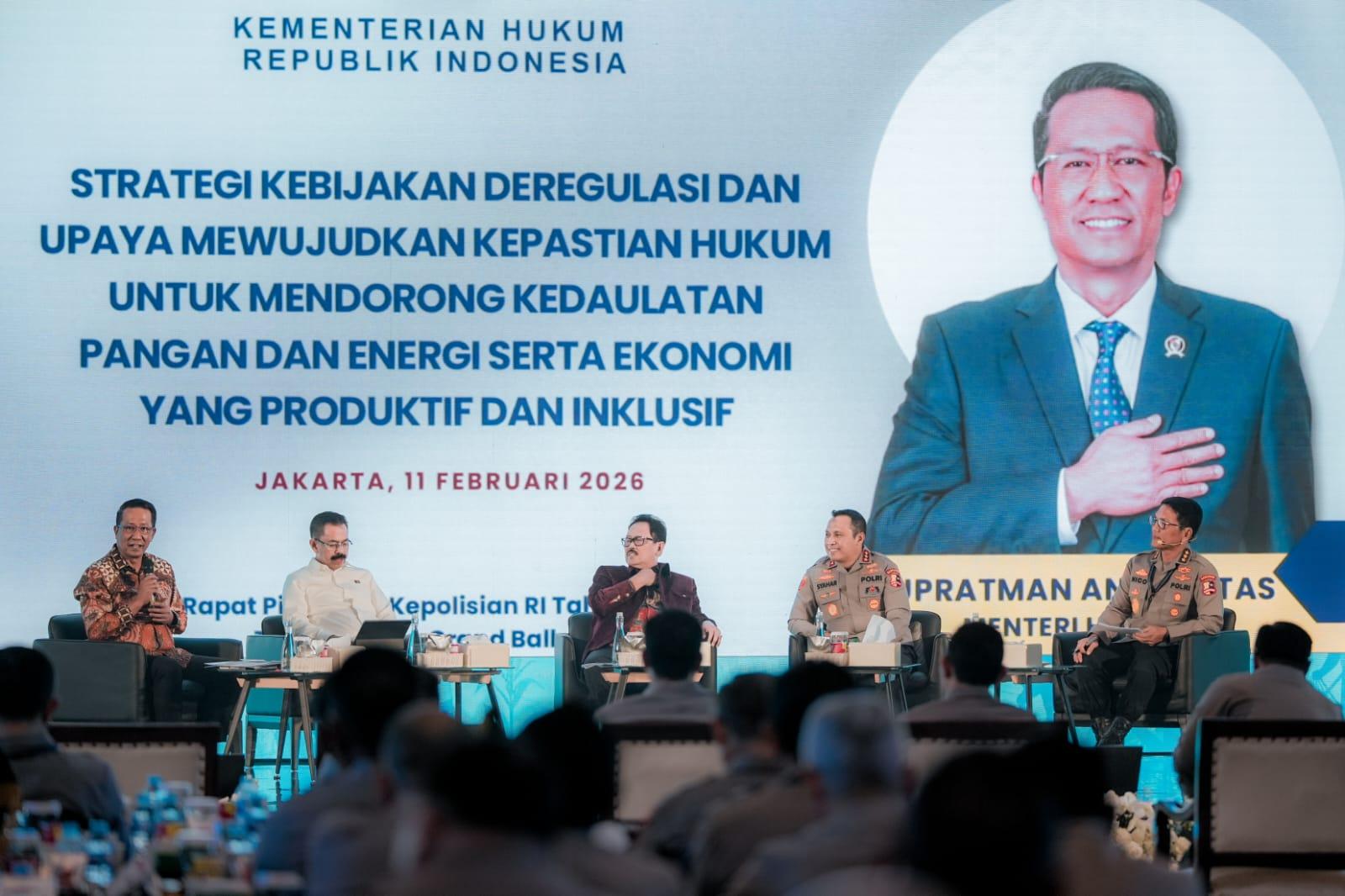
“The new KUHP and KUHAP will enhance legal certainty for food and energy sovereignty, as well as foster a productive and inclusive economy,” Supratman said at the 2026 National Police Leadership Meeting (Rapim Polri) at the Grand Krakatau Ballroom, Jakarta, on Wednesday (February 11 2026).
He explained that Indonesia’s 2026 national development agenda, which prioritizes food and energy sovereignty alongside a productive and inclusive economy, requires effective regulatory support. Legal reform, including the renewal of the KUHP and KUHAP, plays a vital role in strengthening legal certainty and creating a conducive business environment.
Supratman highlighted persistent regulatory challenges that hinder investment and national competitiveness, such as overlapping regulations, ambiguous interpretations, and high compliance costs. Therefore, deregulation is essential to reduce structural barriers and enhance policy effectiveness.
In the food sector, regulatory challenges include overlapping central and regional authorities, inter-ministerial regulatory disharmony, complex licensing processes, inefficient distribution chains, and poorly targeted subsidies and assistance programs.
“Key deregulation in the food sector include simplifying distribution chains, streamlining business licensing in agriculture and food industries, reducing transaction costs, promoting investment in agro-industry and food production, and strengthening legal certainty for investors,” he said.
In the energy sector, Supratman noted that deregulation efforts focus on the oil and gas and electricity industries. Indonesia currently faces declining domestic oil and gas production, making national energy security increasingly vulnerable. Meanwhile, the electricity sector still experiences financial losses and contractual legal uncertainty.
“Energy deregulation targets several areas, including amendments to Law No. 20 of 2001 on Oil and Gas, licensing integration, the development of a legal framework for interconnection and supergrid systems, and specific regulations governing battery energy storage systems,” he explained.
He stressed that stronger legal certainty through the implementation of the new KUHP and KUHAP will provide a clearer foundation for law enforcement agencies in safeguarding the government’s strategic policies, particularly in the food and energy sectors.
Supratman also called on the National Police to support deregulation efforts and ensure law enforcement aligns with national development priorities.
“At least four key roles of the National Police include responsive law enforcement, oversight of national strategic projects, protection of vital national assets, and the digitalization of public services,” he said.
The government remains optimistic that the synergy between regulatory reform and criminal law renewal will enhance Indonesia’s competitiveness while ensuring productive and inclusive development.